
Cheese is one of those products people will happily order online, as long as it arrives in the state it left you. A customer tastes your aged tomme at a summer market, goes home, and three weeks later wants another piece. If the only way to get it is to drive back to the market or send you a message and hope you see it, a good share of them won't bother.
The worry we hear most from small dairies is the cold chain. That's fair. Shipping cheese is harder than shipping jam. But it's a solvable problem, and most of the work is done before you build any shop at all.
1. Start with the cheeses that can handle the trip
Not everything in your cold room belongs online. Hard and aged cheeses are the easy ones: a wedge of a mature alpine style or a cloth bound cheddar can spend a day or two in a parcel with no harm done. Semi hard cheeses usually cope too, if the weather is kind. Fresh cheeses are another story. Ricotta, fresh goat's cheese and soft bloomy rinds near their peak are better kept for collection, local delivery or the market stall.
We'd also think about portion sizes early. Whole wheels sell to shops and restaurants. Home customers want pieces of 200 to 500 grams, vacuum packed or wrapped in cheese paper, with a weight they can count on. If you cut to order, decide whether you sell by fixed weight bands or by the actual weight cut. Fixed bands are far easier to price online, and customers rarely mind a few grams either way.

2. Packing, shipping days and the summer problem
Most dairies that ship well use the same basic kit: an insulated box or liner, a couple of frozen gel packs, and the cheese wrapped so it can't sweat onto the cardboard. Test it before you sell anything. Pack a parcel exactly as a customer would get it, send it to a friend a day away, and ask them to photograph what arrives and note the temperature.
Then pick your shipping days. Many producers only send on Monday to Wednesday, so nothing sits in a depot over the weekend. When it gets properly hot, some stop shipping soft cheeses for a few weeks or switch to express services only. It's better to say so on the shop than to deal with a melted parcel and a refund. Customers tend to respect a dairy that says "we pause shipping in heatwaves".
Work out the real cost of a parcel, box and gel packs included, before you set delivery prices. Insulated packaging adds up quickly, and it's easy to lose money on small orders without noticing.
3. Product pages that answer the questions people email you
People buying cheese online can't taste it, so the page has to do some of that job. Say what milk it is (cow, goat, sheep, raw or pasteurised), how long it was aged, and what it tastes like in plain words. "Nutty, a bit sweet, firm enough to grate" is more useful than a paragraph about terroir. Add the weight, the ingredients and allergens as they appear on your label, storage advice and how long it keeps once opened.
Photos matter more than for most foods. Take one of the whole cheese and one of a cut face in daylight, so people can see the paste and the rind. A short line about the animals or the season the milk came from helps too, and it's the kind of detail big retailers can't copy.
Keep stock honest. Aged cheese comes in batches and some lines run out for months. If the shop still lets people order a wheel you sold last week, you'll spend your evenings writing apologies.
4. Keep online orders next to your wholesale ones
For most small dairies the online shop won't replace the shops, delis and restaurants that already buy from you. It sits beside them. Which means the cheese a customer orders online and the half wheel the deli wants on Thursday come from the same shelf. If those orders live in different places, the shelf is where the trouble shows up.
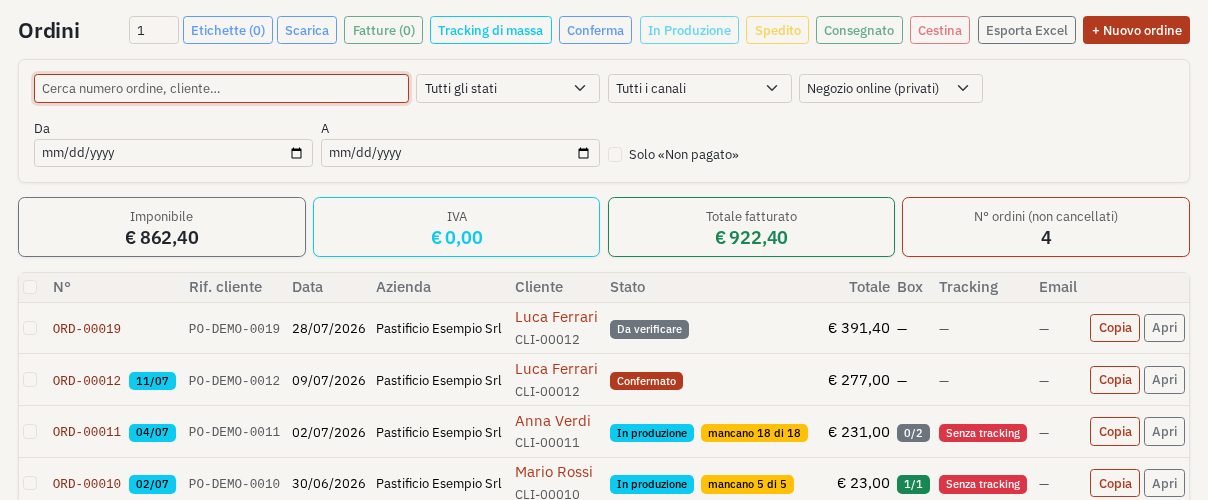
We'd put every order in one list, whatever channel it came from, and let stock come off as orders are packed. If you already number your batches, write down which batch went into each parcel as well. With cheese that's worth doing anyway, since you'll want to know which customers got pieces from a particular make day if a question ever comes up.
Then start small. Put five or six cheeses online, tell your market regulars and your mailing list, and ship for a month before adding more. You'll learn which pieces sell, how long packing really takes, and how your boxes behave in the weather. After that, growing the range is mostly a matter of making more of what people already ask for.